We have compiled a list of manufacturers, distributors, product information, reference prices, and rankings for Wood Plastic Composite.
ipros is IPROS GMS IPROS One of the largest technical database sites in Japan that collects information on.

Wood Plastic Composite - List of Manufacturers, Suppliers, Companies and Products | IPROS GMS

Wood Plastic Composite Product List

1~5 item / All 5 items

Displayed results

Wood Plastic Composite for Exterior Materials

WPC for exterior materials that balances environmental consideration and design.

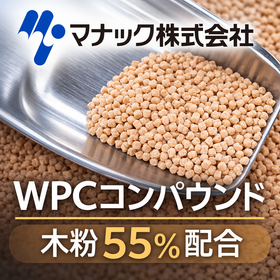
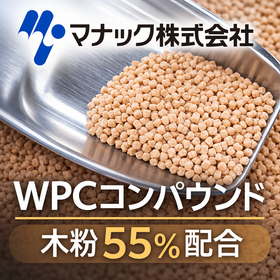
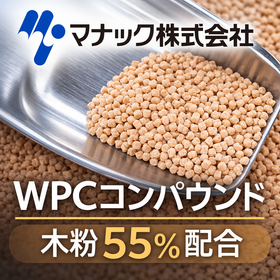
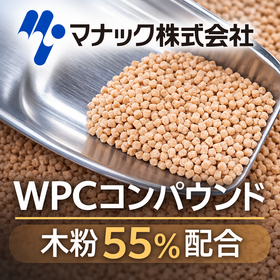
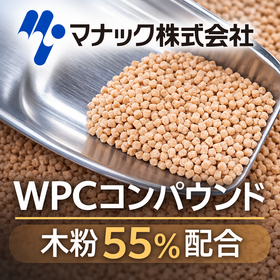
In the construction industry, exterior materials that can achieve both environmental load reduction and design quality are in demand. It is particularly important that these materials excel in durability and weather resistance while showcasing the texture of wood. Traditional plastic materials have the challenge of high environmental impact, leading to an increased need for alternative materials. Our wood-plastic composite (WPC) incorporates up to 55wt% wood powder, significantly reducing the use of petroleum-derived resins, thus contributing to environmental considerations. It also provides wood-like aesthetics, serving as a new option for exterior materials. 【Usage Scenarios】 - Exterior wall materials - Decking materials - Fences - Louvers 【Benefits of Implementation】 - Environmental load reduction (CO2 reduction) - Wood-like aesthetics - Ease of replacement from existing materials

  • Composite Materials
  • Wood Plastic Composite

Added to bookmarks

Bookmarks list

Bookmark has been removed

Bookmarks list

You can't add any more bookmarks

By registering as a member, you can increase the number of bookmarks you can save and organize them with labels.

Free membership registration

Wood Plastic Composite for Furniture Frames

We expand the possibilities of furniture frames with environmentally friendly materials.

In the furniture industry, efforts to reduce environmental impact are being prioritized, and sustainability is also required in frame materials. Wood Plastic Composite (WPC) is gaining attention as an alternative to wood materials because it can balance aesthetic qualities derived from wood with contributions to CO2 reduction. Our WPC minimizes the use of petroleum-based resins while accommodating injection molding and extrusion, making it easy to replace existing polypropylene-based materials. 【Usage Scenarios】 - Furniture frames - Wood alternatives - Environmentally friendly products 【Benefits of Implementation】 - Contributes to reducing environmental impact - Design that utilizes wood-like texture - Molding possible with existing equipment

  • Composite Materials
  • Wood Plastic Composite

Added to bookmarks

Bookmarks list

Bookmark has been removed

Bookmarks list

You can't add any more bookmarks

By registering as a member, you can increase the number of bookmarks you can save and organize them with labels.

Free membership registration

Wood Plastic Composite for Harbors

Replacing existing plastics with environmentally friendly fender materials.

In the port industry, there is a demand for the durability of fenders that support the safe berthing and unberthing of vessels, as well as a reduction in environmental impact. Traditional fenders boast high durability but use petroleum-based plastics, which pose environmental challenges. Our Wood Plastic Composite (WPC) incorporates up to 55wt% wood powder, significantly reducing the use of petroleum-based resins and contributing to environmental impact reduction. [Application Scene] - Fenders [Effects of Introduction] - Reduction of environmental impact - Aesthetic qualities derived from wood

  • Composite Materials
  • Wood Plastic Composite

Added to bookmarks

Bookmarks list

Bookmark has been removed

Bookmarks list

You can't add any more bookmarks

By registering as a member, you can increase the number of bookmarks you can save and organize them with labels.

Free membership registration

Wood-Plastic Composite for Environmentally Friendly Retaining Walls in Civil Engineering

Scope 3 compliance. WPC for retaining walls with a wood-derived design.

In the civil engineering industry, particularly in the field of retaining walls, there is a demand for both environmental impact reduction and durability. Traditional concrete retaining walls have a high CO2 emission during the manufacturing process, posing challenges to the environment. Additionally, consideration for the landscape is also important. Our Wood Plastic Composite (WPC) incorporates up to 55wt% wood powder, contributing to environmental impact reduction by reducing the amount of petroleum-based resin used. It also possesses wood-like aesthetic qualities, enabling the realization of retaining walls that consider the landscape. 【Application Scenes】 * Retaining walls * Slope protection * Riverbank construction 【Benefits of Implementation】 * Reduction of CO2 emissions * Improvement of landscape through wood-like aesthetics * Ease of replacement from existing polypropylene-based materials

  • Composite Materials
  • Wood Plastic Composite

Added to bookmarks

Bookmarks list

Bookmark has been removed

Bookmarks list

You can't add any more bookmarks

By registering as a member, you can increase the number of bookmarks you can save and organize them with labels.

Free membership registration

Environmentally Friendly WPC for Home Appliance Housings

Transforming existing plastics into environmentally friendly options. Biomass composite materials compatible with Scope 3.

In the home appliance industry, efforts to reduce environmental impact are accelerating, and the sustainability of casing materials is being emphasized. In particular, there is a demand for reducing CO2 emissions throughout the entire product lifecycle, making the transition to environmentally friendly materials essential. Wood Plastic Composite (WPC) contributes to CO2 reduction through the use of wood-based aesthetics and biomass utilization, making it an ideal choice for materials that consider Scope 3 compliance. 【Usage Scenarios】 - Casing for home appliances - As an environmentally friendly material - CO2 emission reduction 【Benefits of Implementation】 - Reduction in the use of petroleum-based resins - Wood-based aesthetics - Contribution to Scope 3 compliance

  • Composite Materials
  • Wood Plastic Composite

Added to bookmarks

Bookmarks list

Bookmark has been removed

Bookmarks list

You can't add any more bookmarks

By registering as a member, you can increase the number of bookmarks you can save and organize them with labels.

Free membership registration